

Turbine components
Blades, nacelle assemblies, hubs and tower sections sourced from manufacturers against the project specification, with handling requirements identified up front.

Component and balance-of-plant sourcing for onshore and offshore wind, with the freight and project-cargo coordination that equipment of this size actually requires.

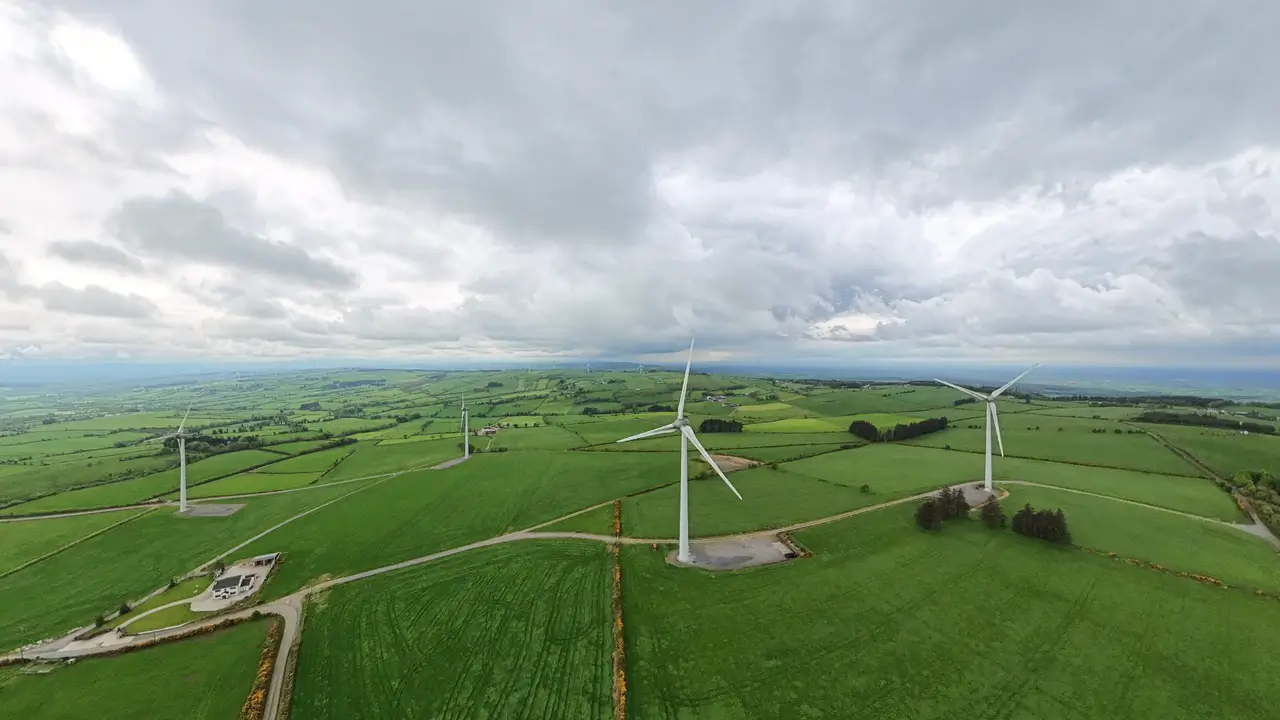
Wind generation is among the most established renewable technologies, and at utility scale it is cost-competitive with conventional generation in many markets. What has not become simple is moving the equipment: blades, tower sections and nacelles are oversized, high-value cargo with unforgiving handling requirements.
Tristar works on the supply and movement side of that equation: sourcing components and balance-of-plant equipment against a project specification, and coordinating the project-cargo shipping that brings them in. Turbines are manufactured by the producers whose equipment we source, not by us.
Oversized components need route survey, lifting plans and vessel selection. The shipping desk handles that work rather than subcontracting the thinking.
Balance-of-plant equipment, cabling and electrical components sourced against the project specification.
Different handling, different vessels, different port requirements: the supply plan reflects which one applies.
Equipment and its movement contracted through one counterparty, so lead times and laycan windows are reconciled in one place.
Wind projects are assembled from major equipment and a substantial balance of plant. These are the categories Tristar sources and helps move.
Blades, nacelle assemblies, hubs and tower sections sourced from manufacturers against the project specification, with handling requirements identified up front.
Tubular tower sections and structural steelwork, including the flange and coating specifications that determine how they are handled and stored.
Transformers, switchgear, protection and substation equipment that connect a wind farm to the network.
Medium and high-voltage cable, array cabling, terminations and accessories for collection systems.
SCADA and condition-monitoring hardware for operational visibility across a site.
Replacement components and consumables for operating sites, where lead time matters more than unit price.
The developer or EPC sets the technical requirement; we confirm what it means for sourcing, packing and movement.
Components and balance-of-plant equipment sourced against that requirement, with lead times stated honestly.
Dimensions and weights are assessed against route, port capability and lifting requirements before anything is committed.
Suitable tonnage identified through the shipping desk, with laycan and discharge capability confirmed.
Discharge, storage and inland movement coordinated with port agents and hauliers.
Shipping, customs and technical documentation prepared for the destination market.
Utility-scale sites where component logistics and inland transport dominate the delivery plan.
Marine installation contexts with specialised vessel, port and handling requirements.
Substation and collection equipment linking generation to the network.
Component supply for sites replacing or upgrading existing equipment.
Spares supply where availability and lead time carry the cost, not the unit price.
No. Turbines and their major components are manufactured by the producers whose equipment we source. Tristar's role is sourcing, commercial coordination and arranging the movement of that equipment to site.
Size and value. Blades and tower sections are oversized cargo needing route survey, suitable vessels, lifting plans and port capability confirmed in advance. Treating it as ordinary freight is how projects lose months.
Offshore introduces marine installation constraints and specialised vessel and port requirements. We coordinate sourcing and movement against those constraints through the shipping desk and a partner network, rather than claiming installation capability we do not have.
Yes. Spares and consumables are sourced against the part specification, and on that work lead time is usually the deciding factor rather than unit price.
The equipment specification or bill of materials, component dimensions and weights, the destination port and site, and the delivery window. Those four determine both what can be sourced and how it can realistically be moved.
Specification, dimensions, port and programme: the four things that decide what can be sourced and how it actually moves.